
Starting a culinary journey is exhilarating and slightly intimidating, and the first step is acquiring a compact but capable set of beginner kitchen essentials that support learning, encourage experimentation, and reduce friction at every stage of cooking.
Why the right beginnings matter
The right tools flatten the learning curve. They help a novice produce reliable results, which in turn builds confidence. Inexperienced cooks who invest in a few well chosen items learn technique faster, they make fewer errors, and they are more likely to practice regularly. Efficiency breeds curiosity, and curiosity deepens skill.
Foundational cookware
Cookware forms the literal and figurative foundation of a kitchen. Select pieces that are versatile, resilient, and forgiving. A medium size stainless steel skillet serves myriad roles, from sautéing aromatics to pan searing proteins. A 10 to 12 inch skillet is ideal for single pan meals, and it helps develop basic heat control skills.
A heavy bottom saucepan in a 2 to 3 quart capacity handles sauces, grains, and small soups. Look for lids that fit well, and weight that suggests even heat distribution. A larger pot, sometimes called a stockpot, assists with pasta and batch cooking. It is useful when learning to manage multiple components simultaneously.
One enameled Dutch oven or heavy casserole dish expands technique options. It braises, it roasts, and it behaves predictably at low heat. Its thermal mass smooths temperature fluctuations, which is particularly helpful when practicing slow cooking and stewing.
Essential knives and cutting surfaces
A good knife transforms chopping into a pleasure. Prioritize a quality chef knife in the 8 inch range, one that balances in the hand and retains its edge. Complement it with a small paring knife for precise tasks like peeling and trimming. Keep blades sharp, because a sharp knife is safer and faster than a dull one.
Choose durable cutting boards with surface differentiation. A wooden board provides a forgiving cut surface for vegetables and bread, while a synthetic board reserved for raw proteins simplifies sanitation and can be run through high temperature washes. Maintain at least two boards to minimize cross contamination.
Utensils that matter
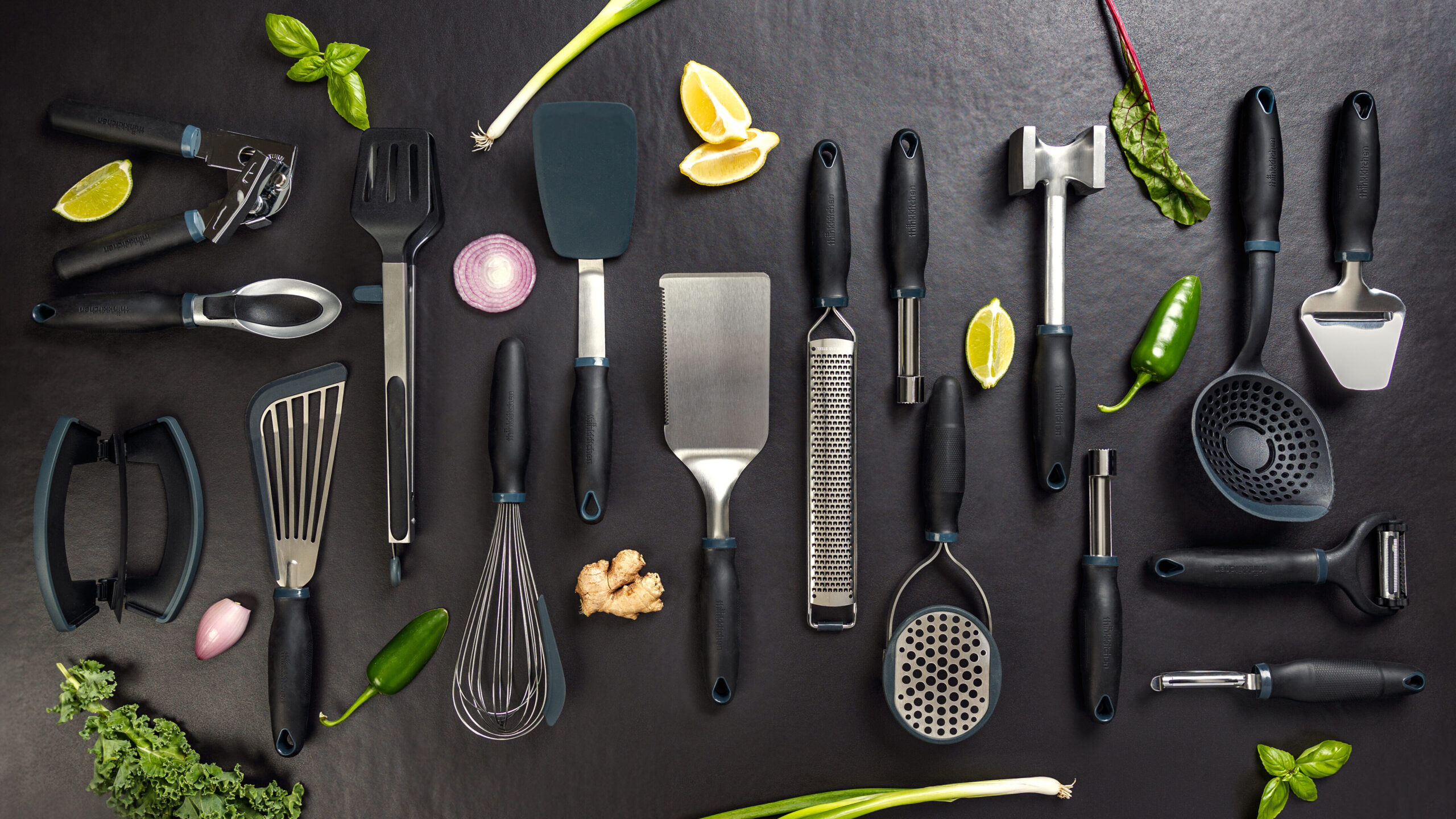
Utensils are the silent workhorses of daily cooking. Invest in a heat resistant spatula that scrapes pans clean, a sturdy set of tongs for turning and plating, and a slotted spoon for lifting items from liquids. A silicone or nylon spoon protects cookware surfaces, and a whisk integrates air into sauces and batters.
A ladle and a solid serving spoon will make portioning soups and stews uncomplicated. A fish spatula which is thin and flexible will prove invaluable for releasing delicate fillets. Choose utensils that feel comfortable, not clumsy, in hand.
Measuring and precision tools
Baking and consistent savory cooking both depend on accurate measurement. A digital kitchen scale produces far more reliable results than cups when precision is important, especially for dry ingredients. A set of nested measuring cups and spoons remains useful for quick tasks, and a liquid measuring cup with a pour spout saves drips and imprecision.
An instant read thermometer prevents undercooking and gives peace of mind when tackling proteins for the first time. A simple kitchen timer keeps track of multiple steps, and it trains timing instincts over time.
Prep tools that speed learning
Tools which simplify preparation reduce frustration. A box grater or a microplane provides fine texture for cheese, zest, and aromatics, improving integration into dishes. A sturdy vegetable peeler minimizes waste and speeds prep for roots and fruit.
A colander or fine mesh sieve is indispensable for rinsing grains, draining pasta, and straining stocks. Mixing bowls in varying sizes support everything from marinating to combining batter. A splatter guard keeps stovetops manageable while searing.
Small appliances with big returns
Certain compact appliances provide outsized benefits for beginners. A blender produces soups, sauces, and smoothies with minimal technique. A hand held immersion blender is particularly handy, as it blends directly in pots, which reduces transfer time and cleanup.
A basic toaster oven can substitute for a full size oven when space is limited. It reheats, crisps, and bakes small items efficiently. A multi function rice cooker removes uncertainty from grains, delivering consistent results through automated cycles.
A slow cooker or a programmable pressure cooker offers forgiving ways to explore texture development, and it allows hands off practice with long form techniques. These appliances make it possible to create complex flavors with minimal active learning time.
Pantry essentials for beginners
A well composed pantry supports improvisation and rapid progress. Stock stable items that form the backbone of many dishes. Olive oil and a neutral oil like canola or grapeseed cover frying, finishing, and dressing needs. A range of vinegars supplies acidity for balance, while soy sauce or tamari provide savory depth in global recipes.
Staples such as rice, dried pasta, canned tomatoes, and stock or bouillon create instant foundations. Dried herbs and a small selection of ground spices including cumin, paprika, black pepper, and a warm spice like cinnamon or nutmeg broaden possibilities. Salt in both fine and coarse forms aids seasoning control.
Canned legumes and jarred preserved items shorten time to plate when a novice is still refining technique. A jar of quality mustard or a pot of tomato paste amplify finishing flavors with little effort.
Storage and organization
An organized kitchen reduces cognitive load significantly. Use clear storage containers for dry goods to monitor levels at a glance. Label items with purchase dates to manage freshness. Stackable containers save space and enable quick retrieval during busy prep.
Create zones, such as a baking zone with measuring tools and frequently used flours, and a savory zone with oils and canned goods. Keeping related items together shortens decision time and prevents frantic searches.
Cleaning, safety, and sanitation
Clean as you go to keep the cooking surface functional and safe. Implement a three step washing method using rinse, wash, and dry, to maintain order and reliability. Use separate cloths or towels for surfaces and for hands, to reduce cross contamination.
Understand basic food safety practices. Refrigerate perishables promptly, cook proteins to safe temperatures, and wash produce to remove soil. Keep a fire extinguisher accessible and store knives in a block or on a magnetic strip to avoid accidents.
Budget minded buying
Begin with quality over quantity. A modest investment in a chef knife, a reliable skillet, and a good cutting board yields more benefit than a drawer full of low grade gadgets. Buy multipurpose tools where possible, and delay purchasing single purpose items until a specific need emerges.
Shop sales, and consider gently used items in reputable second hand stores for pieces like cast iron skillets, which often last a lifetime. Prioritize items that will be used weekly, and avoid impulse purchases of trendy appliances that will gather dust.
Maintenance and longevity
Care prolongs the life of tools and keeps them performing well. Learn how to season and maintain cast iron, and avoid abrasive cleaners on enameled surfaces. Hone knives regularly with a honing rod, and arrange professional sharpening periodically to restore the edge.
Replace worn nonstick pans before coatings degrade excessively, because worn coatings produce uneven heat transfer which complicates technique mastery. Store items properly to prevent warping and damage. This care saves money and prevents frustration.
Building a starter kit
A thoughtfully composed starter kit balances capability and cost. Begin with essentials and add incrementally. Here is a streamlined list to consider:
- One 8 inch chef knife and one 3 to 4 inch paring knife.
- One 10 to 12 inch stainless steel skillet and one medium saucepan.
- One large pot for pastas and batches.
- Two cutting boards, wooden and synthetic.
- A set of mixing bowls.
- Measuring cups and spoons, and a digital scale.
- Tongs, spatula, slotted spoon, and whisk.
- A box grater and vegetable peeler.
- A colander and a fine mesh sieve.
- One blender or an immersion blender.
- Storage containers and basic pantry stocks.
This list is compact, yet it covers a wide spectrum of recipes and techniques.
Learning through practice and projects
Skill accrues through repetition and small projects. Start with basic recipes that teach key techniques, such as roasting vegetables, making a simple pan sauce, and baking a loaf of bread in a forgiving method. Focused practice on tasks like knife skills and controlling heat accelerates proficiency.
Set projects that include a planning stage, a shopping list, and a debrief. For example, plan a one pan dinner, cook it, and then note what took the longest, what caused mess, and what could be streamlined next time. Iteration is the fastest teacher.
Time saving strategies for beginners
Adopt few simple strategies to make cooking manageable. Batch roast vegetables for several meals, and use them as toppings or bases for bowls. Make dressings and vinaigrettes in small batches and store them for the week. Pre measure spices for dishes that are frequently prepared.
Use par boiling and quick finishing techniques to reduce stove time for dense vegetables. Reserve more complex recipes for weekends when there is time to practice and learn.
Designing a practical kitchen layout
A small kitchen can be efficient with good planning. Keep the primary cooking zone near the heat source, and store pots and pans within reach. Place knives and cutting boards near the sink and prep surfaces. Locate frequently used spices and oils adjacent to the cooktop to enable rapid seasoning.
Create a small landing area for groceries when they come in, and establish a dedicated spot for dirty dishes to prevent clutter. These modest design choices reduce friction and streamline workflow.
Sustainable and ethical choices for beginners
Choose items that last and avoid disposable culture. A cast iron pan, properly maintained, can outlast generations. Glass storage containers replace disposable plastic, and cloth towels are preferable to single use paper in many contexts.
Buy seasonal produce and support local purveyors when possible, because fresh seasonal ingredients often require less manipulation and more forgiving techniques. Reduce waste by using scraps to make stock, and compost organic waste where feasible.
Gradual expansion and specialization
Add specialized tools slowly and purposefully. If baking becomes a focus, invest in a stand mixer and a set of pans. If soups are a favorite, a fine mesh sieve and a heavier stockpot will pay dividends. Let cooking interests guide purchases, and resist the impulse to buy for aspiration rather than need.
Troubleshooting common beginner problems
Many initial obstacles have simple remedies. If a pan sticks, verify heat management and the amount of oil used. If soups taste flat, check acidity and seasoning balance, and adjust with a splash of vinegar or a squeeze of citrus. Over salted dishes sometimes benefit from dilution or a starchy starch to absorb excess.
Practice tasting during cooking, and adjust incrementally. Keep flavor enhancers on hand, such as mustard, soy sauce, or concentrated stock, to rescue dishes without extended simmering.
Resources for continued learning
Books, online tutorials, and community classes offer valuable instruction. Structured resources help novices progress in a safe sequence from simple to complex. Seek sources that emphasize technique and fundamental principles, because skills transfer across recipes and cuisines.
The importance of curiosity and patience
Cooking rewards curiosity and patience. Try new ingredients, but do so in small doses. Learn one technique at a time, and allow mistakes to be part of the process. Each error informs the next attempt, reducing uncertainty and building a personal culinary lexicon.
Final practical checklist
- Acquire a chef knife, paring knife, skillet, saucepan, and large pot.
- Purchase two cutting boards and basic utensils.
- Stock a pantry with oils, vinegar, dried grains, canned tomatoes, and key spices.
- Invest in a digital scale and an instant read thermometer.
- Organize storage and designate prep and cooking zones.
- Practice knife skills and basic heat control.
- Maintain tools through regular cleaning and sharpening.
- Expand tools as interests deepen and skills mature.
About the Author


